

Birding in Zambia: Why It’s One of Africa’s Best Destinations
Updated: Apr 2

If you spend any time reading about African wildlife, you will almost certainly come across that statement. But what does it actually mean in practice? And perhaps more importantly, does it matter if you are not already a serious birder?
Before we even get to Zambia, it’s worth addressing a common misconception about birding itself.
Birding in Zambia isn’t just for the tweed-and-binocular crowd
Birding has long had an unfair reputation as a slightly eccentric or even snooty pastime. Images of quiet enthusiasts peering through scopes while whispering Latin names have not helped.
In reality, birding is one of the fastest-growing outdoor hobbies in the world. Participation has surged in recent years, particularly among younger people discovering wildlife through photography, social media, and nature travel. In the United States alone, surveys suggest over 45 million people now actively engage in birdwatching, and similar trends are being seen across Europe and increasingly elsewhere.
There are good reasons for this.
Spending time watching birds encourages people to slow down, pay attention to their surroundings, and connect more deeply with nature. Numerous studies have linked birdwatching and exposure to birdsong with improved mental wellbeing, reduced stress, and greater mindfulness. In short, it’s good for the soul.

And, as someone once joked rather brilliantly:
“Birding is like Pokémon… but for adults.”
It’s a funny comparison, and not entirely wrong. The thrill of spotting a new species can be addictive.
But that description also oversimplifies things slightly. For some people birding is about building a list or “ticking” species. For many others it is something far richer: noticing behaviour, listening to calls, photographing birds, learning habitats, and simply enjoying the astonishing diversity around us.
Whether you keep a list or not, paying attention to birds adds an entirely new dimension to any time spent outdoors.
So why Zambia?

Zambia is frequently described as one of Africa’s finest birding destinations, and with good reason.
To date, 782 bird species have been recorded in the country—a number roughly comparable to the total recorded across the whole of Europe. For a single destination, that is an extraordinary level of diversity. But numbers alone don’t tell the whole story. One important thing to understand is that Zambia is a large country, and many of the rarer or more specialised species occur in specific corners of it. Some of these are well outside the classic safari circuits.
For example:
The legendary Shoebill is most reliably found in the remote wetlands of Bangweulu.
The elusive Vermiculated Fishing Owl occurs in forested rivers in the far northwest around Mwinilunga.

For the truly dedicated birder chasing rarities, reaching these locations can involve significant travel. However, the great strength of Zambia is that its major wildlife areas combine exceptional birding with exceptional wilderness and mammal viewing. This is where places like Kafue National Park, the Lower Zambezi, and the Luangwa Valley come into their own. For anyone who enjoys watching the birds on a garden feeder back home but has never been on safari, Zambia’s national parks offer something very special indeed: world-class wildlife and world-class birding at the same time.

The surprise of camp birding
One of the things that often surprises visitors is just how many birds can be seen without even leaving camp. At Musekese Camp, in the remote northern sector of Kafue National Park, our running in-camp bird list currently stands at 235 species. That’s not from game drives or walks — that’s simply from sitting in camp with a pair of binoculars and paying attention. It becomes very clear, very quickly, that birding doesn’t need to be a dedicated activity. It simply becomes part of the fabric of the safari experience.
What about endemics?
Interestingly, Zambia is not particularly rich in endemic bird species compared to some other African destinations. For the very top tier of global birders — those who have travelled extensively across the continent — this can mean that relatively few species are completely unique to Zambia.
But that shouldn’t be mistaken for a lack of special birds.
Two species in particular are iconic:
Zambian Barbet, one of the country’s true endemics
Black-cheeked Lovebird, found primarily in southwestern Zambia
Both are charismatic, beautiful, and absolutely worth travelling to see. And beyond the endemics, Zambia offers something arguably even more exciting: the opportunity to see huge numbers of species in a relatively short period, including many birds tied to specific habitats types.

A country of habitats
Part of the reason Zambia’s birdlife is so rich lies in its remarkable diversity of habitats.
Across the country you will find:
Dry Kalahari sand woodlands
Vast floodplains and seasonal wetlands
Marshes and swamps
Miombo woodland stretching to the horizon
Dense riverine forests
Even relic rainforest patches known locally as Mushitu
Each habitat supports its own unique community of birds, meaning the species you encounter can change dramatically from one region to another. For visiting birders, this ecological variety makes Zambia endlessly rewarding.

Seasonality matters
Timing can also play an important role in planning a bird-focused visit. The rainy season (roughly November through March) is often spectacular for birding. Migratory species arrive from Europe and Asia, resident birds move into breeding plumage, and the landscape bursts into vibrant greens.
However, this is also the time when many of the more remote safari areas become inaccessible due to rain. There are also regional nuances. For example, February and March are prime months for one of southern Africa’s most sought-after birds — the Angola Pitta, which can occasionally be found in the valleys of the Lower Zambezi region. But that same period may not be ideal for large congregations of waterfowl on the Kafue Flats.
As is so often the case in Africa, local knowledge matters enormously when deciding where and when to go.

The importance of guides
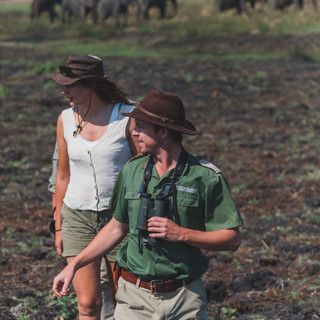
Birding is also one area where guides can make a tremendous difference. Zambia is fortunate to have several outstanding specialist bird guides, many of whom operate independently and accompany visiting birding groups across the country. That said, safari guides based at camps like ours are often exceptionally knowledgeable birders too. At Classic Zambia Safaris, our guides spend years learning the calls, behaviours, nesting seasons, and habitats of the birds around them. In many ways, a guide who knows every corner of their local area can be just as valuable as a travelling specialist. They know which trees the barbets favour, where the owls roost, and when certain migratory species are likely to appear. That depth of local familiarity is often what turns a casual sighting into a memorable experience.

The bottom line
So when people say Zambia is a great place for birding, what they really mean is this:
It’s a place where astonishing bird diversity exists alongside vast wilderness, remarkable wildlife, and very few crowds. You don’t need to be a serious birder to appreciate it.
If you enjoy nature, landscapes, and the small details that bring wild places to life, then simply paying attention to birds will add an entirely new layer to your safari.
And who knows.
You may arrive thinking birding isn’t really your thing…
…and leave with a notebook full of sightings, a camera full of bird photographs, and the slightly surprising realisation that the birds ended up being just as much a highlight of your safari as the lions and leopards.
Or perhaps even more so.


Finding Wisata Turki options supports organized trip planning. Destinations remain outlined clearly. Scheduling follows structured preparation.