

Musekese Camp: Why It Is a Very Rare and Special Kind of Safari
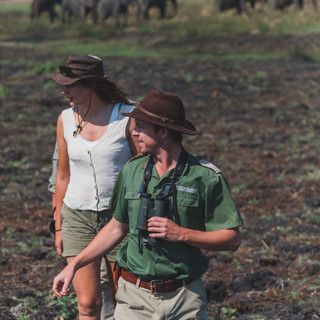

There are many wonderful safari camps across Africa. Some offer remarkable luxury, some incredible wildlife, and others access to landscapes that have been known and travelled for decades.
But every now and then, a place comes along that is something quite different.
Musekese Camp is one of those places.
Not because it is the most luxurious, or the most photographed, or the most famous. In fact, quite the opposite. What makes Musekese special is something harder to describe in a brochure: it is a place that has been built from the ground up, piece by piece, over time, by people who first arrived here when nothing existed prior.
To understand why Musekese is such a rare safari experience today, you have to go back to the beginning.

When There Were No Roads
Fourteen years ago, the area around Musekese looked very different.
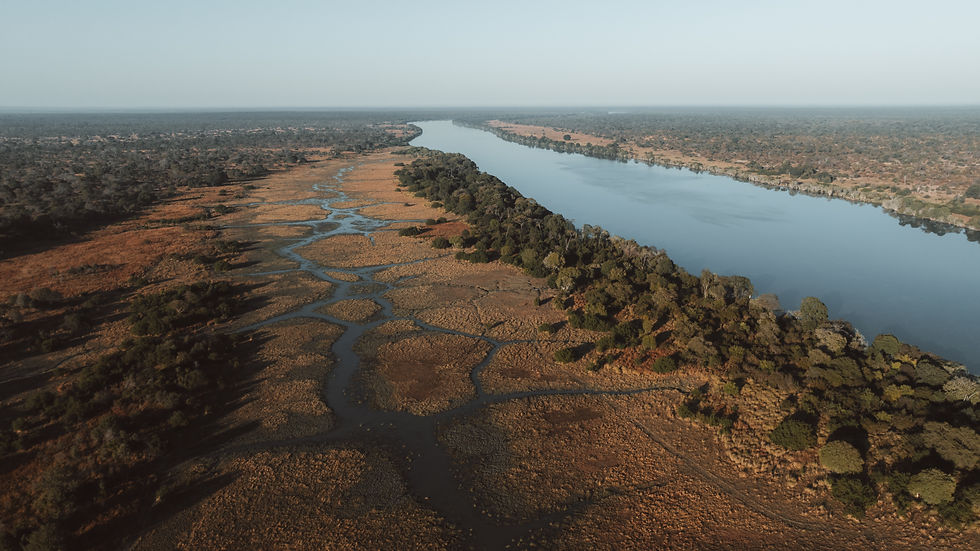
There were no roads leading to the river (the nearest road was over 50km away!), no camps nearby, and very little knowledge about what the wildlife populations actually looked like in this corner of the vast Kafue National Park.
In fact, the first “road” survey here was done on foot.
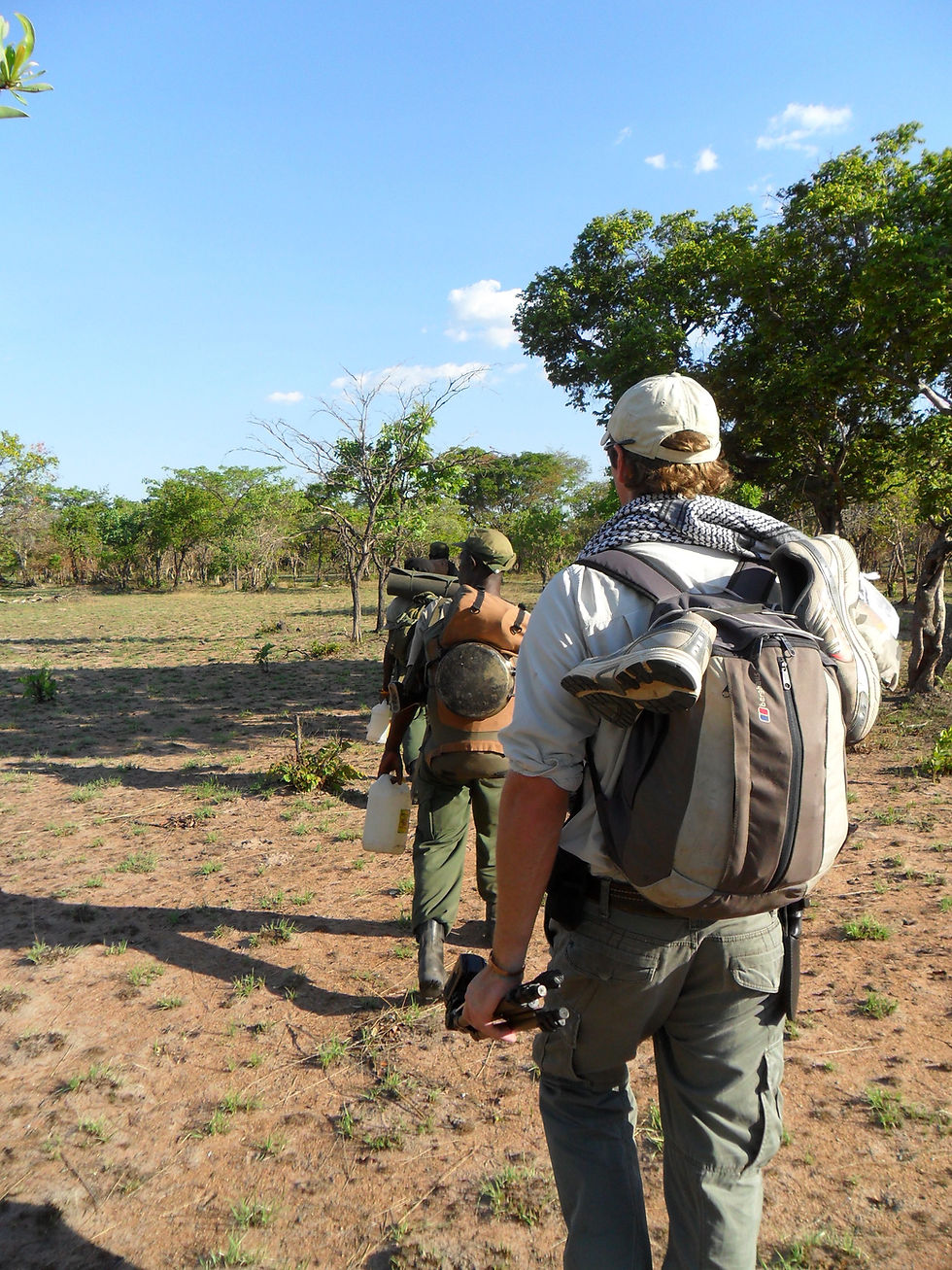
One day in late 2011 involved what we later described as “a long, long walk” — heading out with a GPS, notebooks, and a vague sense of direction to see if a route to the river might even be possible. The blog about that day still exists on our site, and reading it now feels like looking at the first page of a much longer story.
At the time, there was no guarantee the idea would work.
But the landscape had something about it. A quiet wildness. A sense that if given enough time and care, it could become something extraordinary.
Starting With Very Little
Musekese didn’t begin with big investors, development plans, or grand lodge designs.
It began with a mobile safari kit, an ageing Land Rover, and a great deal of stubborn determination.

Phil and Ty started with their own savings, along with a bit of help from parents who believed in the idea enough to support the dream.
For several years they shared a single 3m x 3m dome tent, living out of canvas while slowly trying to understand the landscape around them.

There were no neighbouring camps to learn from, no established wildlife viewing circuits, and very few visitors.
Everything had to be discovered from scratch.
Where the animals moved. Where roads might work. Where a camp could sit without disturbing the rhythm of the bush.
The First Musekese Camp Safari
The first version of Musekese Camp stood on a different site entirely.
For three years, a small and very simple camp operated there while the surrounding area slowly began revealing itself. The focus of the experience was on walking with Phil and Tyrone.

Wildlife sightings were sporadic, the road network was minimal, and every outing was genuine exploration.

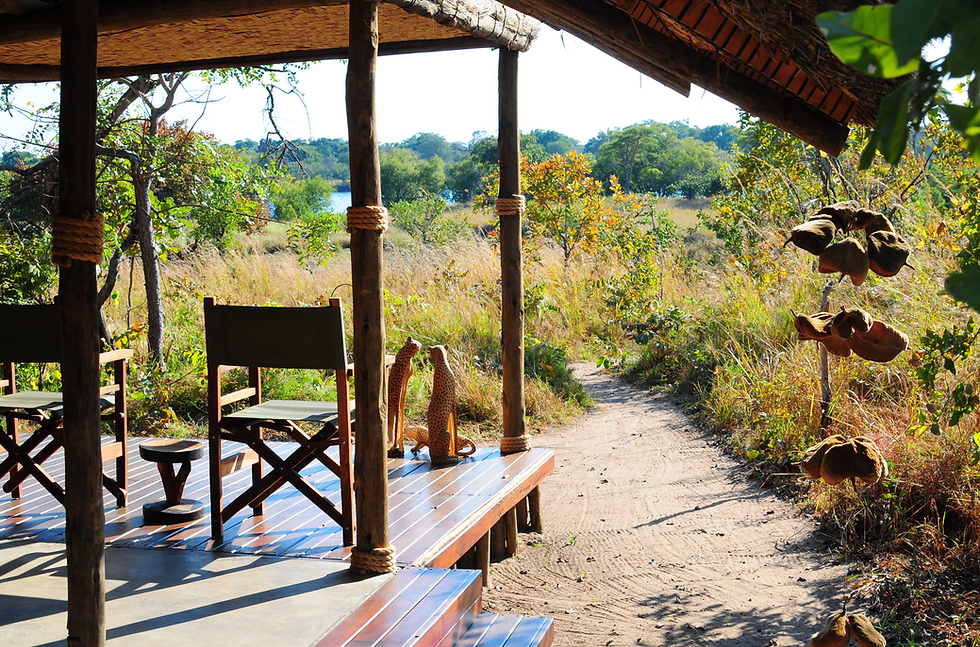
Eventually, the camp moved to its present location overlooking Eden Lagoon — a place that felt immediately right.

It offered water, open space, and a sense that wildlife might one day thrive here.
But that future would still take years to unfold.
Conservation Came First
From the beginning it became clear that tourism alone would not protect this landscape.

Poaching pressures existed, roads needed maintenance, and wildlife numbers were fragile.
In 2018, this effort formally became Musekese Conservation, an organisation dedicated to protecting the wider ecosystem surrounding the camp.
In those early days, even the first wildlife police officers were trained using funds paid out of our own pockets. The base camp too, with help from some guests of Musekese Camp.
Equipment was basic. Support was limited. But the commitment was there.
Over time the conservation programme has grown into something far bigger than the camp itself — helping safeguard thousands of hectares of wilderness within the greater ecosystem of Kafue National Park.
Wildlife Habituation
One of the lesser-thought-about realities of developing a brand new safari area is that wildlife does not automatically accept vehicles - they'd never seen one before!
Hours and hours spent sitting quietly near a herd of kudu. Approaching elephants carefully, day after day, until they become accustomed to your presence. Driving past the same groups repeatedly until the vehicle becomes simply another part of the landscape.

This process took years.
Leopard tracks were present long before the animals themselves were ever seen. It took patience and persistence before the first regular sightings began to happen.
Today guests enjoy remarkable wildlife encounters around Musekese — but every one of those sightings sits on top of thousands of quiet hours spent building trust between people and wildlife.

Looking After the Landscape
Long before large-scale park management returned to the area, much of the responsibility for looking after the immediate landscape fell to us.

Fire management became critical. Uncontrolled fires could sweep through vast areas each year.
So firebreaks were cut. Rotational burning blocks were established.

Roads also needed constant attention. With no grader available, eventually a tractor was purchased to help maintain access tracks — and occasionally assist with conservation patrols in remote areas.

It was never glamorous work, but it mattered.
Slowly, the landscape began to stabilise.
Fourteen Years Later… We Are Still Discovering
Today Musekese Camp continues to welcome travellers from around the world.
Wildlife populations have rebounded. Leopards are seen regularly. Wild dog packs move through the area. Large herds of antelope graze the lagoons.

And yet, even now, the sense of discovery has never really left.
The safari area around Musekese is still only about fourteen years old in tourism terms. There are plains we first saw only from the air, and tracks that lead to places we had never explored before.
Even today, sometimes the bush still surprises us. Oh, and we still have the place to oursevles - an area of operation around the size of the Masai Mara.
Why A Safari Here Feels Different
Many safaris today are beautifully curated experiences.
Wonderful camps, perfectly polished service, and wildlife areas that have been refined over decades.
Musekese offers something slightly different.
Here, the story of the place is still unfolding.
The guides who take you out each day are not just showing you wildlife; they are part of a landscape they have helped shape and protect.

When you see a leopard here, it is not just another sighting on a long list. It is a reminder that just over a decade ago, the leopard was only a set of tracks in the sand.
And that the presence of visitors — travellers who care enough to come and experience wild places properly — has helped make the recovery of this ecosystem possible.

In a very real sense, you are part of the story here.
Musekese is not simply a safari camp.
It is a journey that began with a long walk through the bush, and continues to this day...


Comments