

The Busanga Plains Safari – A Truly World-Class Wildlife Destination
Few places in Africa manage to combine exceptional wildlife densities, remarkable diversity, and a genuine sense of wilderness. The Busanga Plains, in the far north of Kafue National Park, is one of them.

For many of us who grew up exploring the Kafue, Busanga has always held a certain magic. Vast open floodplains stretch to the horizon, herds of red lechwe scatter across the grasslands, and predators move through an ecosystem that feels almost perfectly balanced.
For Phil and myself, this isn’t just another safari destination — it’s somewhere we’ve known since childhood.

I spent many childhood trips exploring Kafue with my family, and Busanga was always one of those places that felt larger than life. At 22 years old I became a manager and guide on Busanga. Phil’s connection runs even deeper. As a teenager he began guiding in this very landscape at the original Busanga Bush Camp, long before the area became more widely known. Later, he would play a role in building the Wilderness Safaris camps that helped introduce Busanga to the international safari world.

Years later, when we founded Ntemwa-Busanga Camp, it was very much a return to a landscape we both knew intimately.
Understanding the Busanga Plains
The Busanga Plains form the northern floodplain of the Lufupa River, and while many people refer to Busanga as one single destination, it’s actually made up of several subtly different ecotypes.

Northern Busanga – Papyrus & Lion Country
The northern reaches are defined by a vast papyrus swamp and slightly wetter ground. This is classic lion country, home to some of the park’s most famous prides including the well-known Busanga and Papyrus groups. Game viewing here can be spectacular, particularly when large lion prides move through the red lechwe herds that dominate the floodplains.

Central Busanga – The Floodplain Heart
The central plains are where most of the traditional bush camps cluster. Vast seasonal floodplains stretch outwards in all directions, dotted with Fig-tree adorned termite mounds that act as natural vantage points for predators. In the early mornings of Winter, mist hangs over the grasslands and the rising sun paints the plains in a deep pinkey, orangey, gold — one of the most iconic safari scenes anywhere in Africa.

Southern Busanga – Drier Plains & Diversity
Further south the terrain becomes slightly drier and more varied, with a mix of open plains, channels and woodland islands. This diversity supports a remarkable range of species and is where we chose to position Ntemwa-Busanga Camp — right at the crossroads of several different habitats.
The Busanga Plains Safari “Trifactor”
What makes Busanga truly special is a rare combination of three things that safari destinations rarely achieve together.
Exceptional Predator Density

Busanga is widely regarded as one of Africa’s best predator ecosystems. The lion population alone is extraordinary, with over 50 known individuals regularly using the main game viewing areas. Cheetah can be seen hunting across the plains in the South, while wild dogs and leopard also move through the area (again mainly to the West and South). For guests staying with us, we’re fortunate to have our own local pride — the Ntemwa Pride — along with the occasional visits from the Moshi and Lufupa prides pushing North. Then there are the famous “Ntemwa Boys”, a coalition of three large black-maned males who currently dominate much of the southern Busanga region.
Rare and Iconic Plains Species

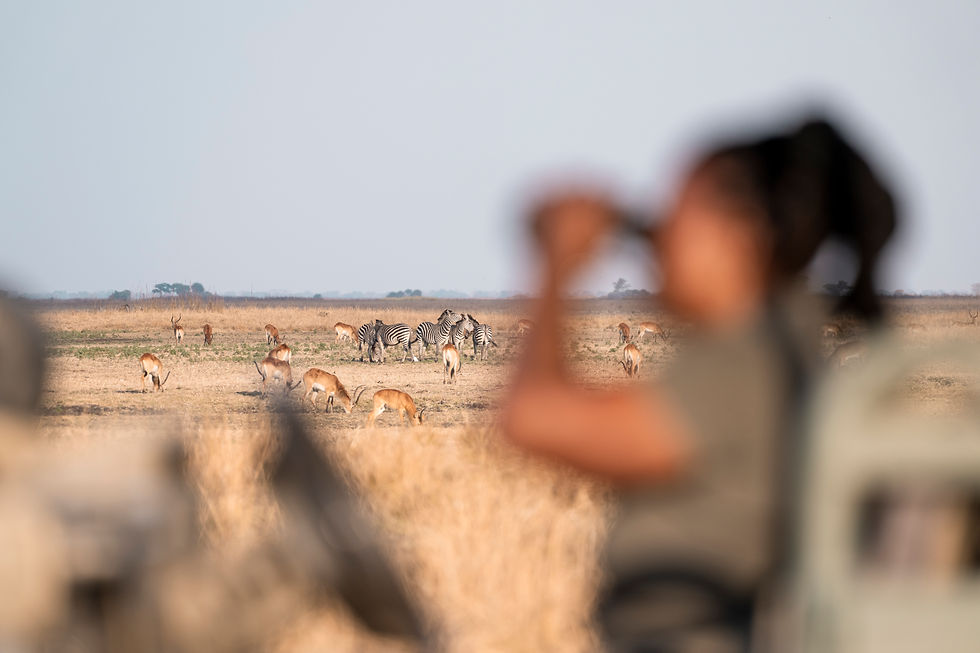
Busanga is also one of the best places in Africa to see certain species that are often surprisingly difficult elsewhere. Large herds of roan antelope and sable antelope roam the plains here — animals that remain shy and elusive in many other regions of Africa but can often be watched calmly grazing in Busanga. And then there are the red lechwe. Thousands upon thousands of them.
When the floodplains are at their most productive, these remarkable antelope form enormous aggregations across the wet grasslands.
True Wilderness

Perhaps the most remarkable thing about Busanga is what isn’t here. Crowds. Despite the incredible wildlife, there are only a handful of small bush camps operating across the plains. That means very few vehicles and a safari experience that still feels wild and uncrowded. It’s not unusual to spend an entire morning out on the plains seeing more lions than vehicles.
Something for Everyone
A Busanga Plains safari manages to appeal to a wide range of wildlife enthusiasts.
Wildlife photographers love the plains for their clean compositions, low grass and endless horizons. The light here — especially in winter — can be spectacular.

Bird enthusiasts are equally well rewarded. Busanga is home to several sought-after specials including but certainly not limited to: Fülleborn’s Longclaw, Wattled Crane, Slaty Egret, Martial Eagle to name but a few...

For mammal enthusiasts, the diversity is extraordinary. Over a dozen antelope species occur here, alongside predators and smaller mammals ranging from honey badger to serval.

A Few Things to Know Before You Visit
Busanga is wonderfully wild, but there are a few realities of life on the plains worth knowing.
It Gets Cold

Winter mornings (June and July especially) can be surprisingly cold, occasionally even bringing frost to the plains. Fortunately our vehicles carry hot water bottles, and you’ll find them waiting in your beds at night too. Just remember to pack hats, gloves and warm layers for those early morning drives.
Traditional Fishing Life

During the early dry season local fishing communities move onto the plains to practice traditional fishing along the Lufupa channels. Weirs appear along the waterways and temporary camps dot the landscape. It’s a fascinating cultural element of Busanga — people living in remarkable harmony alongside lions, hippos and other wildlife.
Fire on the Plains

Fire is a natural and necessary part of grassland ecosystems across Africa. From around June onwards you’ll often see patchwork burns across the plains, sometimes stretching across the horizon at night. Far from detracting from the experience, these fires often create dramatic skies and striking photographic scenes.
A Vehicle-Based Safari Landscape

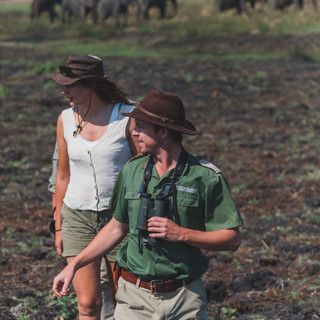
Unlike some parts of Kafue, Busanga isn’t particularly suited to walking safaris. The plains are extremely open, meaning wildlife can spot you from a great distance. There are few trees for shade or cover, and the terrain offers little variation underfoot. For walking safaris, the Musekese area further south — or destinations like the Lower Zambezi or North Luangwa — are far better suited. Busanga, however, excels at vehicle-based wildlife viewing across vast open landscapes.
Ntemwa-Busanga Camp

Our own camp, Ntemwa-Busanga Camp, sits in one of the most diverse parts of the plains with a main area overlooking the plains themselves - often dotted with wildebeest and roan!
Following a full rebuild in 2025, the camp now features brand-new guest chalets raised on stilts overlooking the surrounding grasslands and seasonal waterholes.

We’ve also added a small bird hide that doubles as a WiFi room and photo-editing space — ideal for photographers wanting to review the morning’s images while watching the plains.
Because we’re based just south of the central Busanga Plains, we benefit from an especially diverse mix of predators. On any given day it’s entirely possible to encounter lion, cheetah, wild dog or leopard — all within reach of camp and with a fairly equal chance of seeing each. Add to that the luxury of having a vast area to explore with very little competition from other vehicles, and the experience feels wonderfully exclusive.

We recommend a minimum of three nights, though at least four nights allows guests to explore the plains more fully. Longer morning drives with packed lunches allow us to venture further north if and when we might like to.
The Perfect Kafue Combination

Pairing Ntemwa-Busanga Camp with Musekese Camp or Lwenge Camp offers an exceptional “best of Kafue” safari.
The two areas could not feel more different.
Musekese lies along the riverine woodlands of the Kafue River, offering superb walking safaris and intimate wildlife encounters. Busanga, by contrast, delivers wide-open plains and big predator dynamics.
And the best part?
They’re only about three hours apart by road.
The journey itself is a safari through the heart of Kafue, passing beautiful river systems, woodland habitats and even the new rhino reintroduction area along the way.
It’s a remarkably rich safari experience without the need for expensive or time-consuming inter-camp flights.
A Landscape Defined by the Seasons

Busanga is a true floodplain, and for much of the year it lies underwater.
From December onwards, rains across the catchment area flood the plains, transforming the area into a vast shimmering wetland. Beautiful as it is, this also makes Busanga completely inaccessible.
By May, the waters begin to recede and wildlife gradually returns. Camps typically reopen in June, marking the start of the safari season.

From June through October, the plains come alive as grazing improves and wildlife concentrates around the remaining channels and grasslands. Predator activity peaks during these months, making it one of the most exciting times to visit.

By early November, the first meaningful rains usually arrive again, bringing the season to a close as the floodplain prepares to fill once more.

It’s this annual cycle — flood, retreat, and return — that makes Busanga such a productive and remarkable ecosystem.
Busanga at Its Best
There are many famous wildlife destinations in Africa.
But very few combine:
Predator densities this high
Mammal diversity this broad
Landscapes this open and dramatic
And a wilderness experience this uncrowded
For those of us who know it well, Busanga remains one of the most remarkable safari ecosystems on the continent.
And one we feel incredibly fortunate to call home.


I was looking for information about Famous Bhawan and found the details quite easy to understand. The examples helped me get a better idea.
The information about Vyakaran in Hindi helped me revise a few topics that I had not studied recently.
I searched for Sangya in Hindi for my revision, and this was easy to read and understand.