

A Lower Zambezi Safari – the new best destination in Southern Africa?
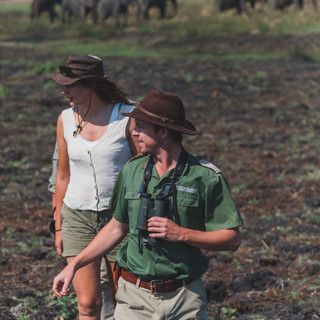

There’s a quiet shift happening in the way people design safaris in Zambia.
For a long time, the narrative was fairly linear: South Luangwa first, maybe a token stop in the Lower Zambezi if you had time, and then—if you were really doing it properly—a final extension into the Kafue.
But that order is changing.
Today, the Lower Zambezi is no longer the “add-on”. In many itineraries, it is becoming the pivot point. The place guests either start with or build around. And in combination with the Kafue, it arguably now offers a broader spectrum of habitat, wildlife behaviour, and experience than the more traditional Luangwa-only circuit ever could.
That is a big statement in Zambia. But increasingly, it is a fair one.
The Zambezi: the difference is in the name
There are few words in African geography that carry weight quite like Zambezi.

It feels familiar even before you arrive. Wide, ancient, powerful in a way that is more felt than explained. And when you get here, it delivers exactly that expectation—but then quietly expands it.
Because in the Lower Zambezi, the river is not just part of the scenery.
It is the safari.
Lower Zambezi National Park sits on the northern bank of the Zambezi River, and that single geographic truth changes everything about how wildlife is experienced here. This is one of the very few places in Africa where you can genuinely safari on water, not just next to it.
And that matters more than it first sounds.
Water as a second safari system
Most safari destinations are built around a single medium: land.

You drive. You walk. You stop. You scan. The rhythm is familiar and consistent.
In the Lower Zambezi, there is a second rhythm running alongside it—boats sliding through channels, canoes drifting silently past hippo pods, elephants crossing islands in slow procession, and buffalo pushing through floodplain grassland islands.

This duality is what defines the park.
Land-based safari here is exceptional in its own right—strong guiding heritage, excellent walking, reliable predator encounters, and varied terrain—but it is the river that elevates everything else.
It reframes distance. It removes noise. It changes perspective entirely.
Even in South Luangwa, where walking safari is often considered the benchmark experience in Africa, you remain fundamentally land-locked for most of the year.
Here, you are not.
That distinction is subtle, but it is also decisive.
The pioneers and the guiding legacy
Lower Zambezi National Park was only proclaimed in 1983, making it relatively young in formal conservation terms. But its safari identity was shaped long before that and some of Zambia’s most respected guiding traditions were forged here.
Early operators such as Chiawa Camp helped define what the Lower Zambezi would become known for: intimate camps, highly skilled guiding, and a safari style built around immersion rather than volume.
Alongside them, latterly, pioneering guiding teams such as Tusk and Mane Safaris contributed to establishing the area’s reputation for walking safaris and river-based exploration at a time when both were still relatively niche offerings in southern Africa.

Walking and canoeing were never “add-ons” here. They were core to how the landscape was understood.
That philosophy still runs through the best experiences in the valley today.
The river, the escarpment, and everything between
The Lower Zambezi is defined by contrast.
On one side, the wide, shifting sands of the Zambezi River. On the other, the steep escarpment rising sharply into the plateau beyond. Between them lies a corridor of woodland, floodplain, and riverine forest that constantly reshapes itself with the seasons.
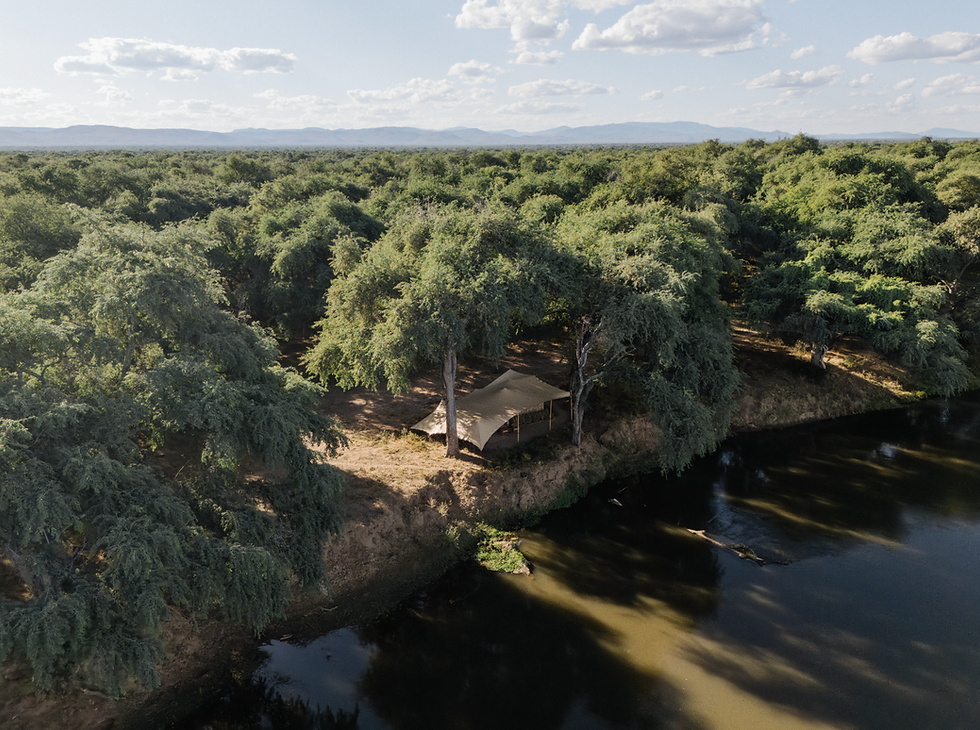
It is one of the few places where you can transition between canoe, boat, vehicle, and walking safari within a single day without ever feeling like you have left the same wilderness.
That fluidity is rare in modern safari design. And increasingly, it is what travellers are looking for.
Canoeing: still one of Africa’s purest safari experiences
Canoeing here remains one of the most quietly extraordinary experiences in African safari.
Not because it is dramatic, but because it is not.

You are at eye level with the river system—watching elephants feed on islands, hippos surface and submerge around bends, fish eagles tracking overhead, and the slow choreography of life along the water’s edge unfolding without interruption.
It is becoming harder to find camps that still offer this properly, with experienced guiding and enough space to do it well and safely.
Where it is offered, it is often unforgettable.

A growing reputation for leopard country
The Lower Zambezi has always supported healthy predator populations, but in recent years its reputation has sharpened—particularly around leopard.

Sightings are now consistently strong, and in some areas almost routine for experienced guides.
It has led to some light-hearted debate within guiding circles, with occasional tongue-in-cheek references to it as the “new valley of the leopard”.
To be clear, that title rightly belongs to South Luangwa Valley, which remains one of the most important leopard strongholds in Africa!
But what is interesting is not competition—it is expansion.
The Lower Zambezi is simply adding itself to that broader leopard narrative in a way that complements, rather than challenges, the Luangwa’s legacy.
From hidden corridor to creative frontier
For years, the Lower Zambezi sat slightly under the radar compared to better-known safari regions when it came to large-scale photography and filming.
That is changing quickly.

There is growing interest from wildlife film crews drawn to its combination of river systems, escarpment backdrops, and relatively uncrowded sighting conditions. It offers a visual language that feels distinct from more heavily filmed regions like the Okavango Delta.
At the same time, it has become increasingly popular with professional wildlife photographers—both established and emerging—who are spending longer periods here to work behaviourally rather than just capture single-frame highlights.
That shift says a lot.
Activities without the structure of “activities”
One of the most understated strengths of the Lower Zambezi is how naturally varied it is.
From many camps, game drives, walking safaris, boating, and canoeing all begin within moments of leaving camp. There is no sense of long transfers or rigid scheduling. You simply move into a different mode of the same landscape.
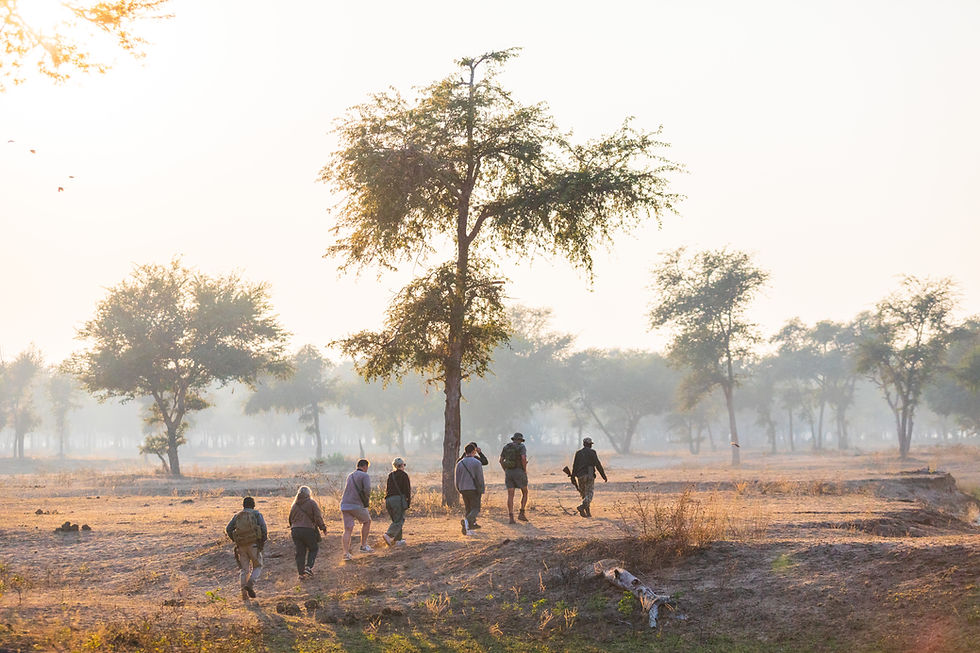
That ease of transition is part of what makes the park feel so cohesive.
The combination that is redefining Zambia
For decades, South Luangwa set the benchmark for classic Zambian safari. And it still does, in many respects.
But the broader picture is evolving.
Today, the Lower Zambezi and Kafue together arguably offer one of the most complete safari combinations in Africa—river systems, floodplains, woodland, and vast unfenced wilderness that complements rather than duplicates.
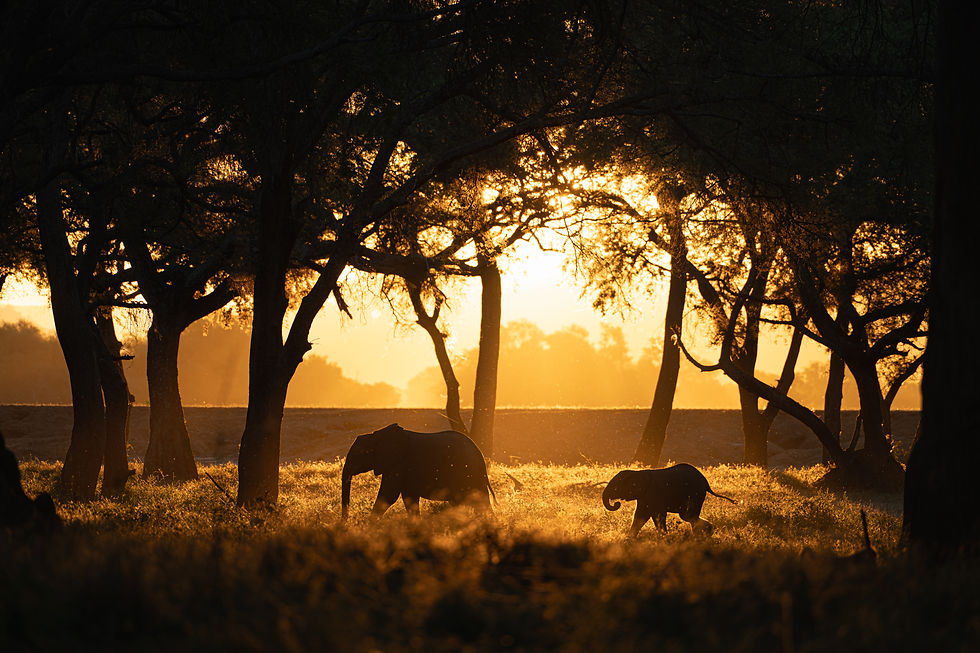
Add South Luangwa into that mix and you still have something exceptional. But it is no longer the only structure that works.
The Lower Zambezi now sits at the centre of that conversation, not the edge of it.
A final thought on a Lower Zambezi safari
The Lower Zambezi is not trying to become something else. It does not need to.
Its strength lies in a very specific combination: a major African river, a wild and accessible national park, and a safari style that moves fluidly between land and water without compromise.
That combination is rare.
And increasingly, it is exactly what defines the most compelling safari experiences in southern Africa today.
Not more places. Better ones.
And the sense that, just for a moment, you arrived before everyone else realised quite how special it was.


Comments