

Why Zambia Still Feels Wild
- Tyrone McKeith
- May 20
- 3 min read
It’s not about what you see — it’s about how you see it

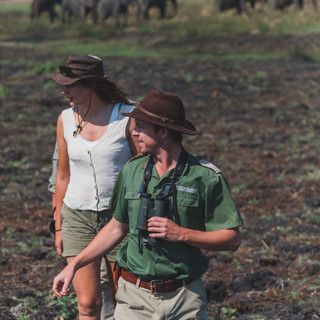
People often describe a safari in terms of what they saw: lions, elephants, leopards, wild dogs. It’s a natural instinct — wildlife is, after all, the draw. But Zambia’s enduring wildness has very little to do with ticking species off a list. It lies instead in how you see what you see, and perhaps more importantly, in everything that doesn’t intrude on that moment.
In Zambia, the wild experience is defined as much by absence as presence.
There are no helicopters hovering overhead. There are no convoys of vehicles racing toward a radio call, no queues of engines idling around a leopard in a tree. You won’t hear the distant hum of traffic, or see electric pylons running through the national parks. These omissions matter. They shape the rhythm, the mood, and the honesty of the safari experience.
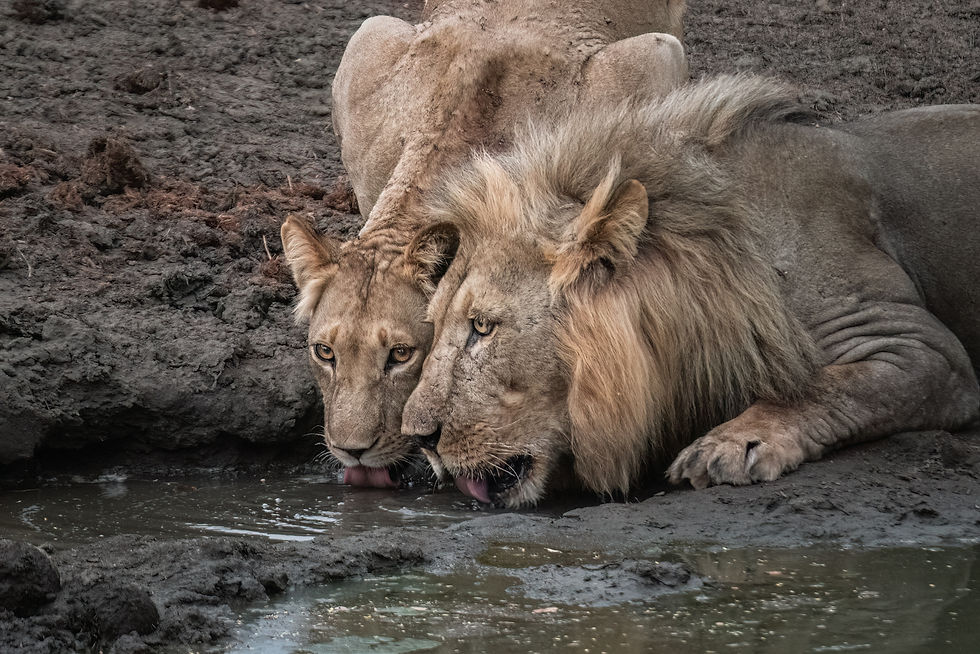
Here, when you stop the vehicle to watch a lion cross the road, the silence stays intact. When elephants move through a riverine forest, you hear branches breaking and birds alarm-calling — not the click of cameras from a dozen directions. The bush does not feel managed or choreographed. It feels indifferent to your presence, and that is precisely the point.
Zambia’s wildness is also protected by seasonality — something often misunderstood as a limitation, but in reality one of its greatest strengths. Many of the country’s most remote camps exist only for part of the year, rising with the dry season and disappearing again when the rains return. Roads flood, grass grows tall, rivers reclaim their floodplains, and vast areas become inaccessible once more.
This natural cycle acts as a reset button. It prevents permanent scarring, limits traffic, and ensures that wildlife is not subjected to year-round pressure. Core park areas — the heartlands of Zambia’s national parks — remain exactly that: cores. Untouched, uncompromised, and distant from the larger, more permanent lodges and hotels that sit on the peripheries.
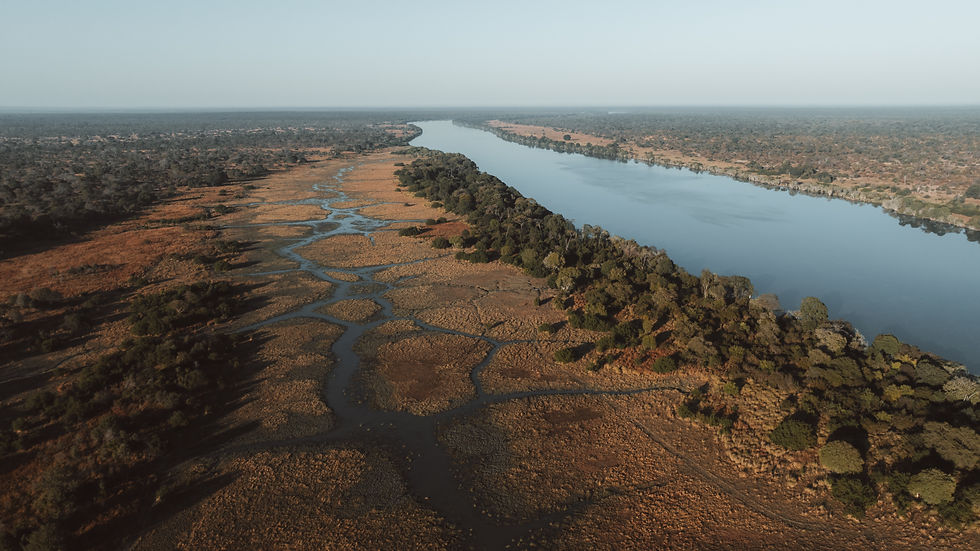
Nowhere is this more evident than in places like Kafue National Park, where immense tracts of wilderness stretch far beyond the reach of infrastructure, or in the Luangwa Valley, where even at peak season the experience remains intimate. South Luangwa may be Zambia’s busiest safari destination, but “busy” is a relative term here. Compared to many of Africa’s better-known parks, it still feels spacious, unhurried, and deeply respectful of wildlife behaviour.
And then there is North Luangwa — one of the quietest safari regions left on the continent. In its vast, mainly roadless landscapes, the silence can be almost overwhelming. Not the absence of sound, but the presence of it: wind moving through grass, distant bird calls, the echo of your own footsteps. It is the kind of quiet that reminds you how rare true wilderness has become and how valuable it is.
Crucially, Zambia’s safari culture supports this way of seeing. Guiding is rooted in observation rather than pursuit, patience rather than pressure. Time is allowed for moments to unfold naturally. A sighting is not something to be conquered or maximised; it is something to be witnessed.

This approach changes the way guests engage with the landscape. Without the distractions of connectivity or crowds, attention sharpens. You notice light, movement, tracks in the dust. You begin to understand that the most powerful moments on safari are often the unscripted ones — a Puku staring intently, a distant alarm call, the slow realisation that you are completely alone in a very big place.
In the end, wildness is not measured by the size of an animal or the rarity of a sighting. It is measured by how uninterrupted a moment feels, how honest the landscape remains, and how deeply you are allowed to sink into it.
And in Zambia, even in its busiest corners, it is still not busy. In its quietest corners, it is deafeningly, profoundly wild.


Comments